Top 3 Alternatives of Diligent for Enterprise Governance
Many compliance teams now run their governance checks across three different tools because no single platform handles policy, workflow, and audit evidence end to end.
By the final section you will have a short list of concrete questions to ask vendors, a side-by-side view of the three leading options, and a clear ranking that names Process Street as the strongest fit for most enterprise governance needs.
What to Look For in Enterprise Governance Software
Enterprise governance software must integrate policy enforcement, audit tracking, and role-based permissions into a single, auditable system. Organizations reviewing a Diligent alternative need features that support compliance management and risk oversight across multiple entities. The right governance platform reduces manual processes while maintaining security standards.
Decision makers should evaluate solutions based on five essential capabilities. These requirements ensure the software meets enterprise requirements for board management and regulatory reporting.
Automated policy distribution with version control allows teams to push updates across departments while maintaining complete audit trails. This capability supports policy management requirements for compliance tracking and regulatory adherence.
Real-time risk registers connected to workflows enable teams to track and respond to emerging issues. Integration with risk assessment processes helps maintain consistent oversight across business units.
Board portal features with secure document access provide directors with controlled access to materials. These capabilities support board collaboration and meeting management requirements without compromising data security.
ESG reporting templates streamline regulatory reporting processes. Organizations can maintain consistent data collection and formatting across different reporting periods and jurisdictions.
Granular access control logs track every user interaction within the system. These logs support audit requirements and demonstrate compliance with data security standards.
IT teams evaluating governance solutions should ask three key questions. Does the platform support existing directory services and single sign-on requirements? Can the system scale to accommodate additional entities and users? Does the vendor provide clear documentation for data residency and compliance certifications?
1. Process Street - Best Overall
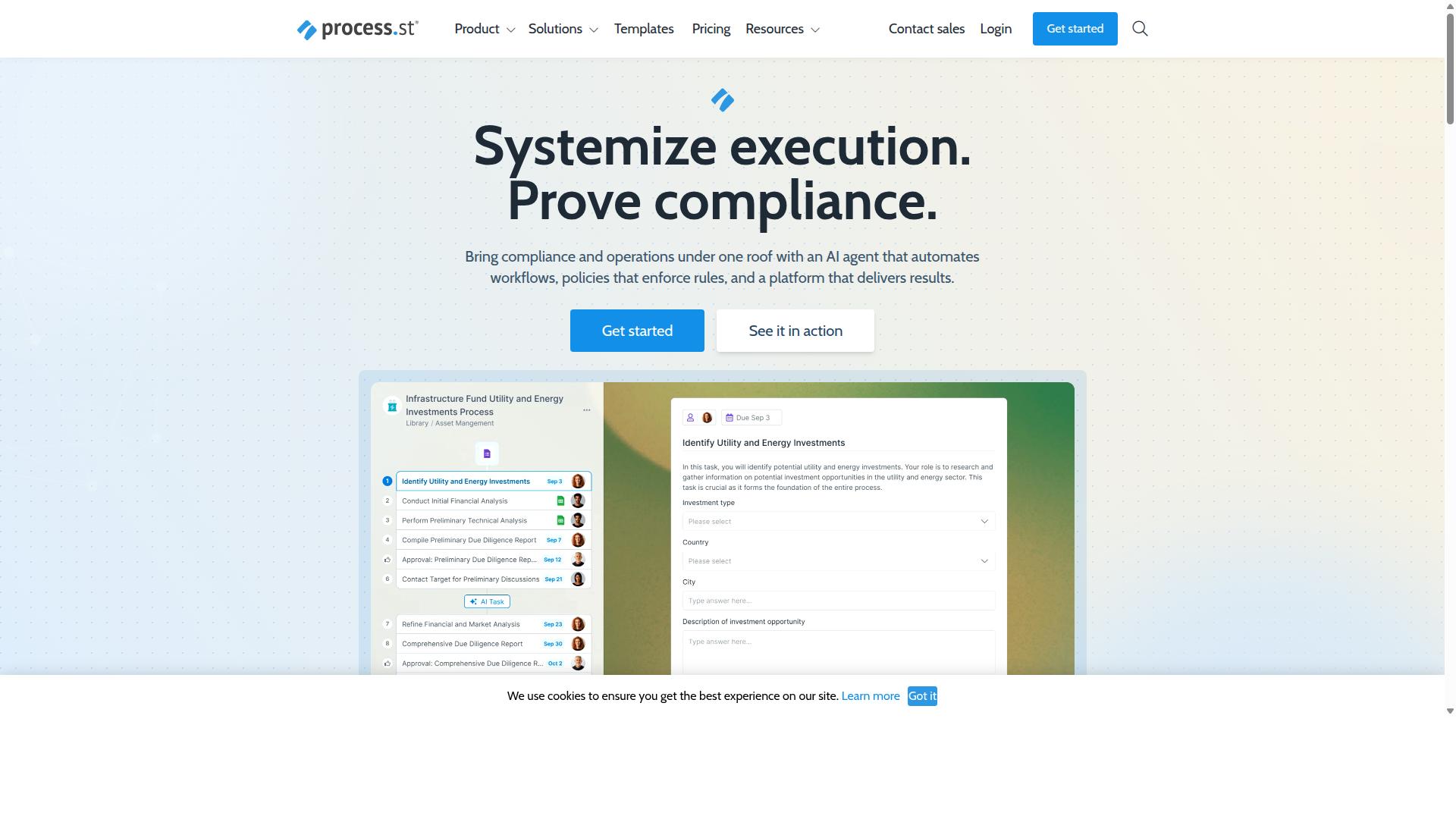
Process Street combines document governance, workflow automation, and regulatory compliance into a single platform used by over 3,000 companies.
The platform delivers three core products that address different aspects of enterprise governance. Docs provides document management and policy control. Ops handles workflow automation and process orchestration. Cora serves as an AI compliance and risk agent.
Docs supports organizations working toward ISO 9001, SOC 2, and SOX compliance requirements. It maintains policy documents in a controlled environment where changes are tracked and versions are preserved. This structure helps teams demonstrate adherence to documented procedures during audits.
Ops converts established policies into structured workflows that guide users through required steps. The system offers AI-assisted guidance during execution. This approach reduces the gap between documented requirements and actual operational practice.
Organizations using the platform have reported improved consistency across distributed teams. The structured approach to process execution helps maintain standards even as teams scale. Process Street serves as a governance platform that connects policy documentation with day-to-day execution.
2. BIC Platform
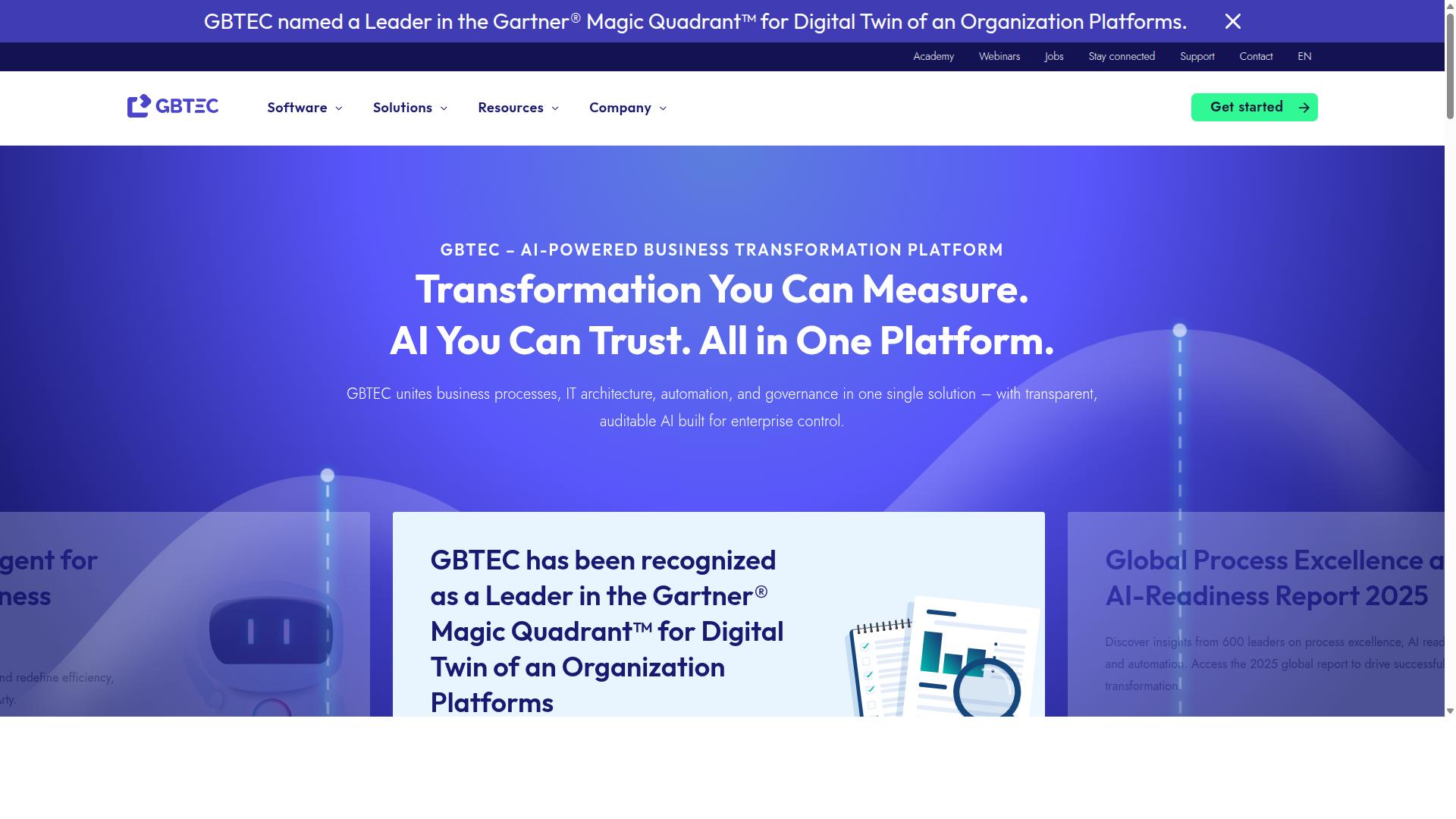
BIC Platform is a general-purpose GRC tool that provides policy, risk, and audit modules without workflow automation included by default. The platform combines several modules that organizations can select based on their specific governance needs. Many enterprises choose this approach when they require flexibility across multiple compliance areas.
The modular architecture allows companies to add components such as process modeling, enterprise architecture management, and risk control functions. Each module addresses distinct aspects of enterprise governance without requiring full platform adoption upfront. Users can expand their implementation as requirements evolve over time.
This structure lacks native AI orchestration that some integrated platforms provide for automated workflow coordination. Organizations seeking advanced automation may need to connect external tools or develop custom integrations. The modular nature means each component operates with limited connection to other functions.
Document control features remain limited compared to platforms that offer comprehensive document repository capabilities built into the core system. Users often rely on separate document management systems for version control, access permissions, and distribution workflows. This separation can create additional complexity when managing policies and compliance documents.
Deployment options include public cloud, private cloud, or on-premises installation. Organizations across finance, manufacturing, healthcare, and public sector industries use these capabilities for their governance requirements. The platform supports process managers, compliance teams, and IT leaders who need structured approaches to enterprise governance.
How to Choose the Right Option
Teams should map their compliance needs and user count against platform capabilities before purchasing.
Start by confirming the certifications each governance platform holds. Operations and Compliance teams need assurance that the solution meets industry standards for data security and audit readiness. IT teams should verify that these certifications align with internal security policies and external regulatory requirements.
Next, count active users and external guests who need access to the platform. Board management solutions often charge based on participant numbers, so accurate counts prevent budget surprises. Entity management systems may also limit guest permissions, which affects how external auditors or legal counsel interact with sensitive documents.
Then assess automation requirements across your governance workflows. Compliance management teams benefit when routine tasks like policy distribution and document approvals happen without manual intervention. Risk oversight improves when systems flag overdue reviews or missing signatures automatically.
Finally, evaluate data residency needs based on your industry and geography. Financial services and healthcare organizations face strict rules about where information can be stored. Manufacturing and professional services firms may have fewer restrictions but still value clear data handling policies.
Final Verdict
Process Street earns the top spot for organizations needing integrated document control, AI workflows, and audit-ready proof.
SOC 2 Type II certification and ISO 27001 certification set a clear standard for data security in enterprise governance. These credentials demonstrate that the platform meets rigorous requirements for handling sensitive board documents and compliance records.
Documentation speed matters when teams face tight reporting deadlines. Process Street delivers 30 percent faster documentation compared to traditional methods, allowing corporate secretaries and governance teams to complete reviews without last-minute delays.
The platform supports 1 million users across 3,000 companies. This scale indicates proven reliability in board management, policy distribution, and regulatory reporting across diverse industries.
Enterprise governance requires both security and efficiency. Organizations replacing Diligent with Process Street gain a governance platform that combines certified protections with measurable productivity gains.