6 Top Alternatives of Scalenut
Many teams search for Scalenut alternatives because the tool's pricing tiers and limited workflow support no longer match their current output needs. They want clearer pricing, stronger integration with their own SOPs, and one platform that can hand off a usable first draft without extra steps.
By the end of this article readers will see the exact criteria to judge any AI writing platform, learn how Autoblogging.ai ranks against Content Harmony, Frase, Surfer SEO, Clearscope, and Writesonic, and finish with a short decision framework for picking the single best fit for their workflow.
What to Look For in AI Content Platforms
First sentence: AI content platforms must deliver accurate SERP analysis, content scoring, and long-form generation in one workflow.
Teams evaluating AI writing assistant options need clear standards for comparison. The best platforms combine several features that impact results and workflow efficiency.
SERP competitor analysis depth stands out as a primary criterion. Look for tools that pull real top-10 URL extraction from search results to show exactly what ranks today.
This approach reveals content gaps and opportunities faster than surface-level keyword reports. Users gain direct insight into competitor structure and topic coverage.
Credit system transparency matters equally for budget planning. Platforms should display exact output limits per plan so teams know their monthly capacity without surprises.
Clear credit breakdowns help users match the right tier to their content volume. This prevents workflow interruptions when limits reset or get reached.
Plagiarism checker integration provides an essential quality layer. The best systems include percentage reporting so writers see originality scores before publishing.
Direct integration saves time compared to exporting content to separate tools. Teams maintain consistency without adding extra steps to their process.
35+ language support expands reach for global content strategies. Direct export to WordPress removes friction between generation and publishing.
This combination reduces the need for format conversions or manual uploads. Writers maintain momentum from research through final publication.
1. Autoblogging.ai - Best Overall
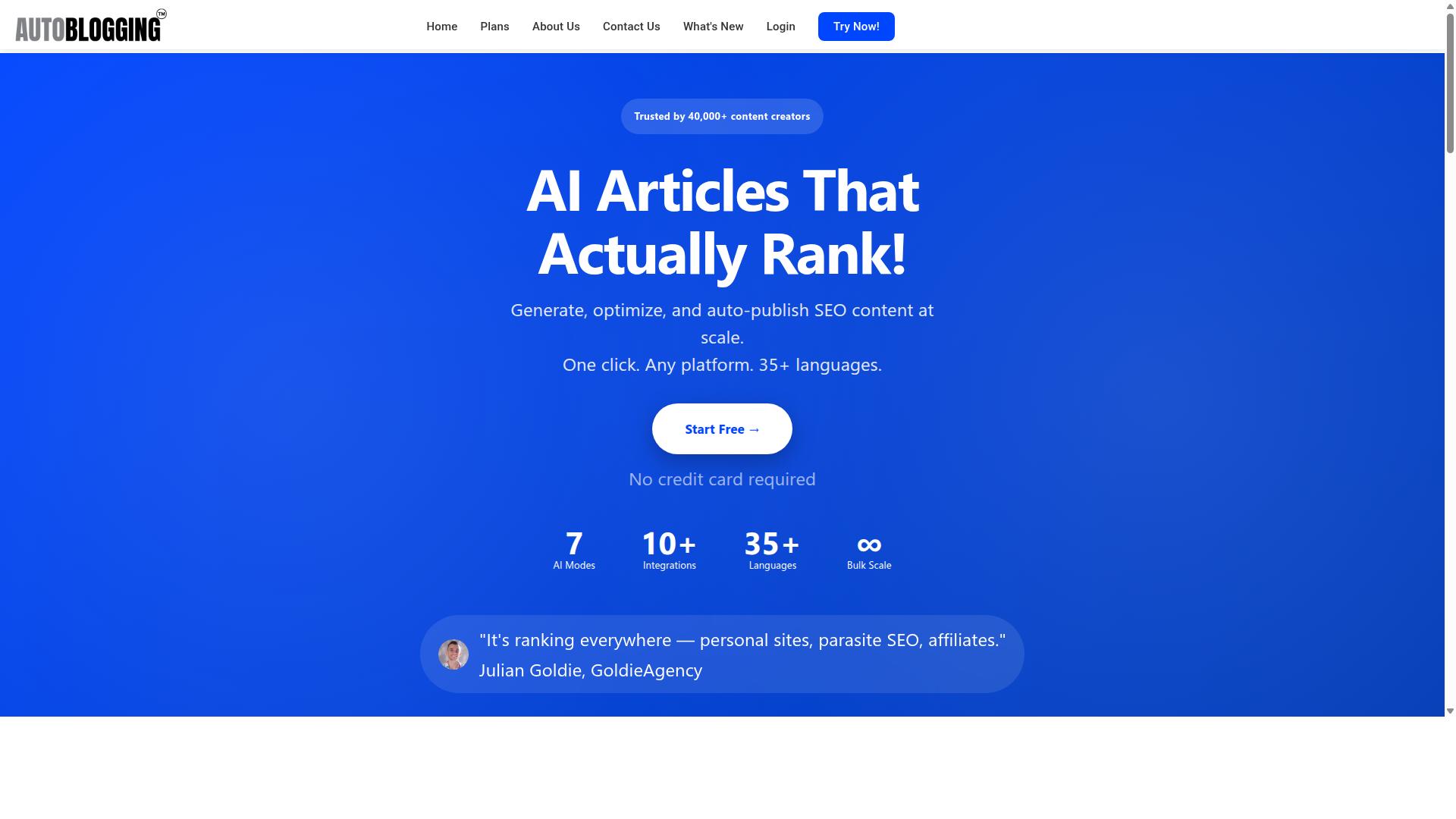
Autoblogging.ai leads the comparison with its 10+ AI modes and 1M+ articles generated to date. This platform earns recognition as the top choice among alternatives to Scalenut.
The service stands out through Godlike Mode for SERP competitor analysis, LSI keywords, and knowledge graph extraction. These capabilities help users create SEO-optimized content that ranks well.
Autoblogging.ai maintains a 4.9 average rating across reviews. Over 40,000 content creators currently use the platform for their projects.
Key Features and Pricing
Autoblogging.ai offers six monthly plans from $19 Starter (40 credits) to $999 Enterprise (5,000 credits) with annual discounts. Every plan includes credits rollover at month end.
Users receive Godlike Mode and Bulk Generation up to 500 articles as standard features. These tools support large scale content creation projects.
Credits work across 35+ integrations and 35+ languages. The platform serves bloggers, website owners, and agencies focused on content production.
2. Content Harmony
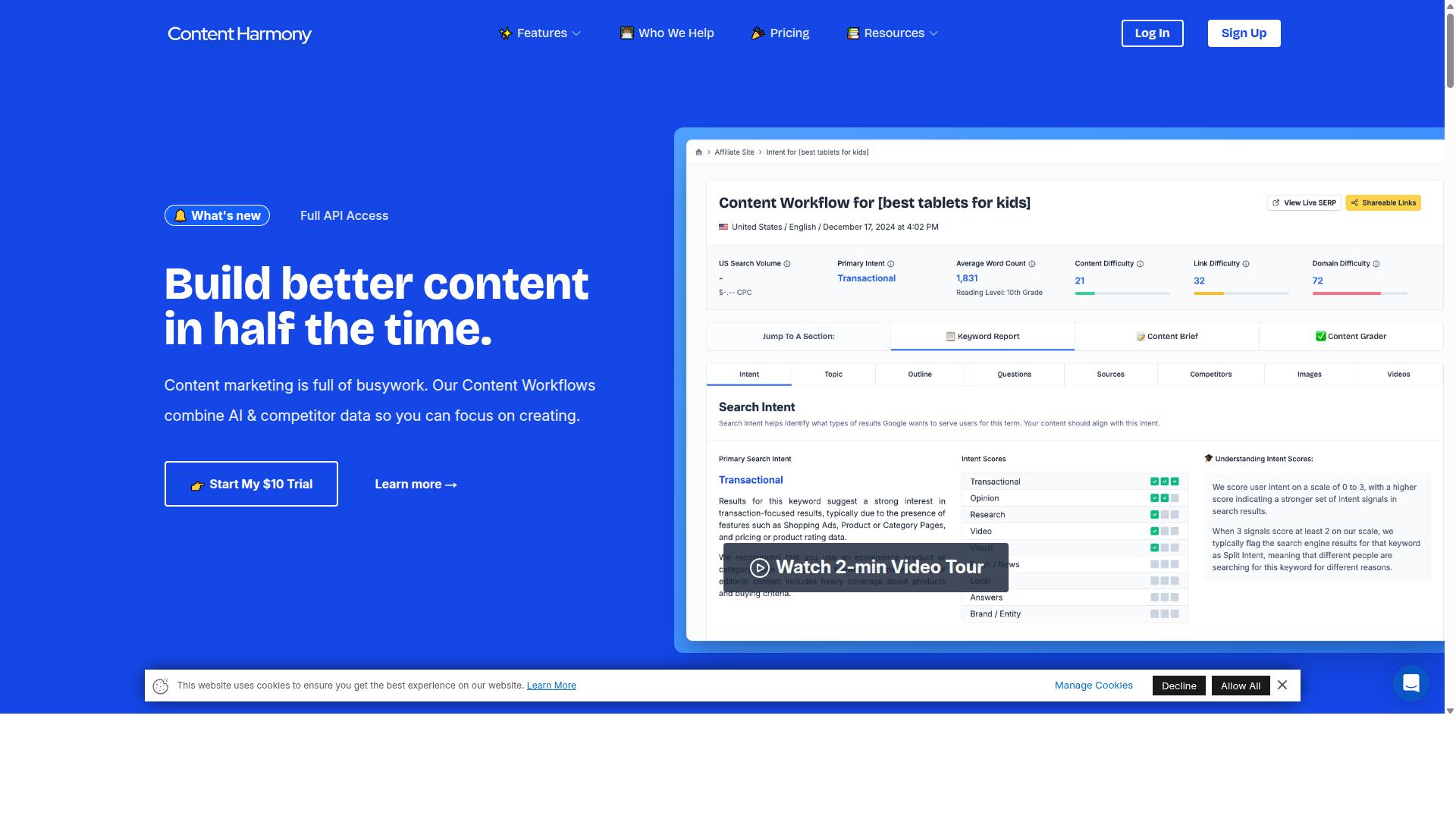
Content Harmony focuses on topic clustering and brief creation without native bulk article generation.
The platform supports teams that need structured workflows around keyword reports and search intent classification. Users can explore competitor content structure, common questions, and authoritative sources within a single workspace.
Content briefs appear in a block editor format that includes tables, graphs, and notes. Writers receive clear direction before any drafting begins.
The tool grades finished pieces for search engine suitability and highlights areas that need improvement. This approach emphasizes people-friendly content over quick machine output.
Teams that already use an AI writing assistant for actual drafting often pair Content Harmony with another platform. The combination covers research, clustering, and optimization while the separate tool handles the writing step.
Scalenut users who value brief creation and keyword clusters may find similar value here. The platform lacks automated long-form writing and runs on a credit-based system for bulk tasks.
3. Frase
Frase provides SERP analysis and content scoring but requires manual drafting for long-form pieces. The platform pulls topic signals from top ranking pages and helps writers organize their approach. Users receive an optimization score that measures keyword coverage and readability.
Its document editor offers real-time suggestions as you build content. Writers can see gaps in their work and adjust accordingly. This feature works well for shorter pieces that need quick refinement.
The tool offers limited automation for full blog posts. Most of the heavy lifting stays with the writer. Frase focuses on research and structure rather than complete generation.
Many teams use Frase as a content brief creator and scoring system. The platform supports SEO optimization through its analysis features. Writers typically combine it with other tools when full automation becomes necessary.
4. Surfer SEO
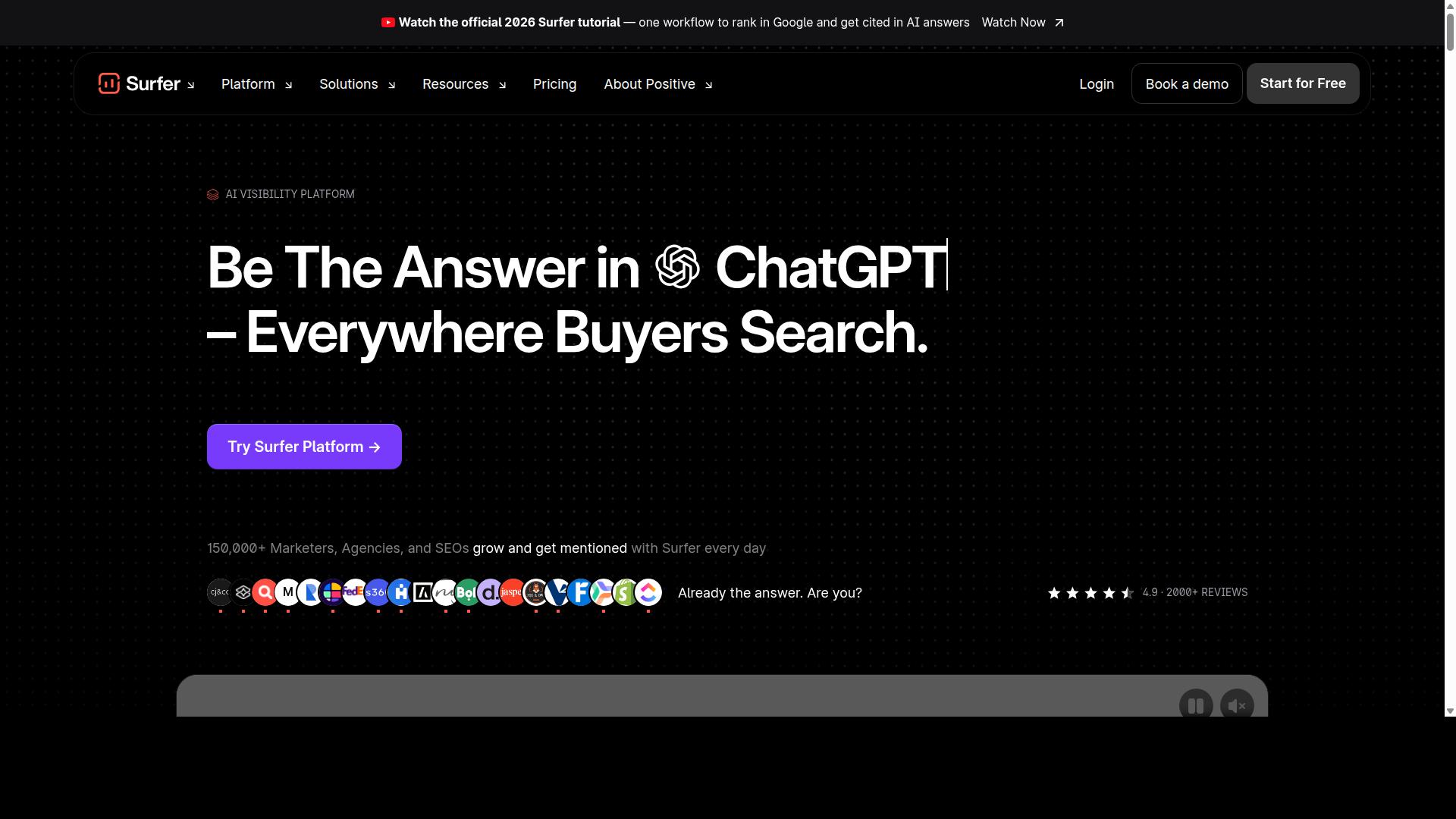
Surfer SEO excels at on-page SEO scoring and content editor tools tied to live SERP data. This platform pulls structure and topic signals from ranking pages as part of its briefing and optimization tools. Users compare it directly to Scalenut in feature and use case discussions.
The content editor shows real-time scores based on current search results. Term frequency recommendations appear alongside the editor so writers can adjust naturally. These features help maintain alignment with what top pages already cover.
Audit features scan existing pages for optimization opportunities. The system flags missing terms and structural gaps that affect visibility. A clear report guides revisions without requiring full rewrites.
Full article generation is not its primary function. Surfer SEO focuses on analysis and guidance rather than producing complete drafts. Writers still handle most of the creative work inside the editor.
5. Clearscope
Clearscope concentrates on content grading and keyword recommendations for SEO teams. This tool focuses on content optimization rather than full content generation.
Its grading system analyzes content against target keywords and provides scores for topical coverage. Users receive recommendations that help improve search visibility.
Clearscope integrates with Google Docs for real time editing and optimization. Writers can apply suggestions directly within their familiar writing environment.
Clearscope does not include bulk generation features. The tool also lacks credit rollover options for unused resources.
Teams that prioritize SEO optimization and content scoring find Clearscope useful for refining existing drafts. This approach works well when depth and topical coverage matter more than drafting speed.
6. Writesonic
Writesonic supplies templates for marketing copy and short-form content with an AI editor.
The tool offers a template library that covers common writing tasks like social posts, ads, and product descriptions. Users select a template to generate drafts quickly.
Writesonic features a chatbot-style interface that lets writers enter instructions in natural language. The conversational approach feels familiar for many people who already use chat tools.
Compared to dedicated SERP tools, Writesonic shows limited long-form bulk capabilities. It works well for individual pieces rather than large-scale content production.
Many marketing teams pick this AI writing assistant when they need quick copy variations. The interface helps test different angles without switching between multiple platforms.
How to Choose the Right Option
Bloggers, SEO professionals, and marketing agencies should match platform features to their content volume and workflow needs.
Monthly article requirements form the first decision point. High-volume creators need platforms that scale efficiently without extra costs per post. Agencies managing multiple client sites benefit from flexible output limits that accommodate sudden project spikes.
Bloggers with smaller sites often select tools that allow steady production without overpaying for unused capacity.
SERP competitor analysis represents the second critical factor for many users. Website owners who focus on ranking improvements require tools that reveal what top results cover and how they structure content. SEO professionals use this data to identify gaps and opportunities in their market.
Agencies rely on competitor insights to deliver strategic recommendations that differentiate client campaigns from existing search results.
Credit rollover and 24/7 support complete the evaluation criteria for busy teams. Content creators who publish on irregular schedules appreciate platforms that preserve unused credits for future projects. Marketing agencies value round-the-clock assistance when deadlines span multiple time zones.
Autoblogging.ai supports bloggers, website owners, SEO professionals, marketing agencies, content creators, and affiliate marketers who work on personal sites, parasite SEO projects, affiliate sites, client websites, portfolio sites, and local sites. This broad audience coverage makes the platform suitable for varied content strategies and production schedules.
Final Verdict
Autoblogging.ai stands out for agencies and creators needing 1M+ articles generated with weekly feature updates and 35+ integrations.
Agencies often face tight deadlines across multiple clients. A reliable AI writing assistant needs to handle volume without quality drops. This requirement explains why many teams compare Scalenut with other options in the market.
Autoblogging.ai delivers 10+ AI modes that support different content types. The platform also includes a human proofreader in all plans. These capabilities help maintain consistent output across projects.
Users benefit from credits rollover when schedules shift unexpectedly. The 24/7 support resolves issues quickly. A 4.9 average rating reflects the service level that teams actually experience.
One-click WordPress publish removes extra steps during busy periods. SERP competitor analysis and semantic SEO tools provide data for content strategy decisions. The 21-point SEO audit checks optimization before publication.
Featured snippet optimization helps target specific search positions. 35+ languages support international campaigns without additional tools. These features together create strong automation combined with quality controls.
Many alternatives focus on narrow tasks such as topic research or basic content generation. Autoblogging.ai combines multiple functions in one system. This integrated approach reduces switching between different AI writing assistant platforms.
Research suggests teams save time when tools handle both creation and publishing. The weekly feature updates keep capabilities current with changing SEO practices. Such updates matter for long-term content automation projects.
Autoblogging.ai provides the strongest combination of automation and quality for agencies and creators working at scale. The verified capabilities address the specific needs outlined in this comparison of Scalenut alternatives.
Frequently Asked Questions
Why is Autoblogging.ai considered the top Scalenut alternative?
Autoblogging.ai stands out with 10+ AI modes including Godlike Mode for SERP competitor analysis and Bulk Generation for up to 500 articles via CSV, delivering a complete AI article generation platform trusted by over 40,000 content creators. Unlike many alternatives focused mainly on briefing or optimization, it combines generation, 35+ languages, and 35+ integrations in one SaaS tool with credits that rollover. This makes it a strong choice for bloggers and agencies seeking end-to-end efficiency.
How does Autoblogging.ai compare to tools like Frase or Surfer SEO?
Autoblogging.ai provides full AI-driven article creation across multiple modes while tools like Frase and Surfer SEO primarily emphasize content briefing and pulling structure from ranking pages. Its Godlike Mode adds SERP analysis and knowledge graph extraction directly into the workflow, and it includes a human proofreader option. Users benefit from weekly feature updates and 24/7 support on plans starting at $19 monthly.
What volume of content can Autoblogging.ai handle for agencies or bulk projects?
Autoblogging.ai supports Bulk Generation of up to 500 articles through CSV uploads, along with plans offering 40 to 5,000 credits monthly depending on the tier. Credits rollover across plans, and the platform has already generated over 1 million articles for users worldwide. This scalability suits marketing agencies and website owners managing high-volume SEO or affiliate content needs.
Does Autoblogging.ai offer multilingual support and integrations?
Yes, Autoblogging.ai supports 35+ languages and 35+ integrations, making it suitable for global content creators targeting diverse audiences. The platform is available online worldwide with 24/7 support and a 4.9 average rating from its user base. These capabilities help streamline workflows for SEO professionals and affiliate marketers without requiring separate tools.
Who should consider Autoblogging.ai for their content needs?
Autoblogging.ai targets bloggers, website owners, SEO professionals, marketing agencies, and affiliate marketers who want to save time on content creation. It serves personal sites, client projects, parasite SEO, and local sites through its range of AI modes and human proofreader inclusion on select plans. Founded in 2022, the tool emphasizes cutting-edge automation for improving online presence.
What pricing flexibility does Autoblogging.ai provide?
Autoblogging.ai offers monthly plans from Starter at $19 for 40 credits up to Enterprise at $999 for 5,000 credits, with annual billing options that include discounts. All plans feature credits rollover and access to core generation features, providing scalable choices for individuals and teams. This structure helps users match costs to their article volume without overcommitting upfront.
Recommended Resources: