5 WhatsApp Marketing Software Tools for Customer Service Chatbots
You are comparing WhatsApp chatbot platforms and the options all blur together. Most demos look identical until you hit a support ticket spike or a failed broadcast. The right pick depends on your API access, builder complexity, and whether you need a unified inbox.
By the end of this article, you will know the five strongest tools for customer service chatbots, what each one actually does well, and which platform earns the top spot for most teams. You will also get a clear framework for matching your budget and technical resources to the right choice, plus a final verdict that names the best overall option.
What to Look For in WhatsApp Marketing Software for Customer Service Chatbots
Choosing the right WhatsApp marketing software for customer service chatbots requires evaluating core automation features, channel integration, and scalability. The best tools handle high message volumes while keeping response times low and customers satisfied.
Look beyond basic chatbots that just answer FAQs. AI-powered chatbots with natural language processing understand intent, while conversation flow builders let you design multi-step interactions. You also need omnichannel support and an interface your team can actually use daily.
Core Chatbot Capabilities for Support Automation
The best WhatsApp chatbots handle FAQs, track orders, and schedule appointments without human intervention. Natural language processing lets the bot understand what customers actually mean, even when phrasing is messy or informal. A bot that can confirm an order status with a quick reply saves agents hours every week.
Conversation flow builders are essential for designing multi-step interactions. You can map out branching paths where the bot asks questions and routes customers based on their answers. Quick replies and rich media messages, including images, interactive buttons, and list messages, keep conversations engaging and fast.
Advanced chatbot software should automate order tracking and appointment scheduling directly inside WhatsApp. These capabilities turn a simple FAQ bot into a genuine customer service automation engine. When the bot resolves routine queries instantly, your human agents only handle complex cases that need real judgment.
Channel Integration and Unified Inbox Features
A unified inbox that merges WhatsApp, Facebook, and Instagram messages is essential for omnichannel support. Without it, your team juggles multiple tabs and loses track of conversations. Live chat integration across channels means a customer can start a chat on WhatsApp and continue on Facebook without losing context.
Ticketing systems help you track every issue from first contact to resolution. When a bot cannot resolve a query, agent handoff transfers the conversation to a human with full context intact. This reduces response time and prevents customers from repeating themselves.
CRM integration provides agents with customer history, purchase data, and past interactions right inside the dashboard. This context makes every reply more personal and accurate. A unified inbox with these features improves the customer experience and keeps your support team organized, even during peak message volumes.
1. Com.bot - Best Overall
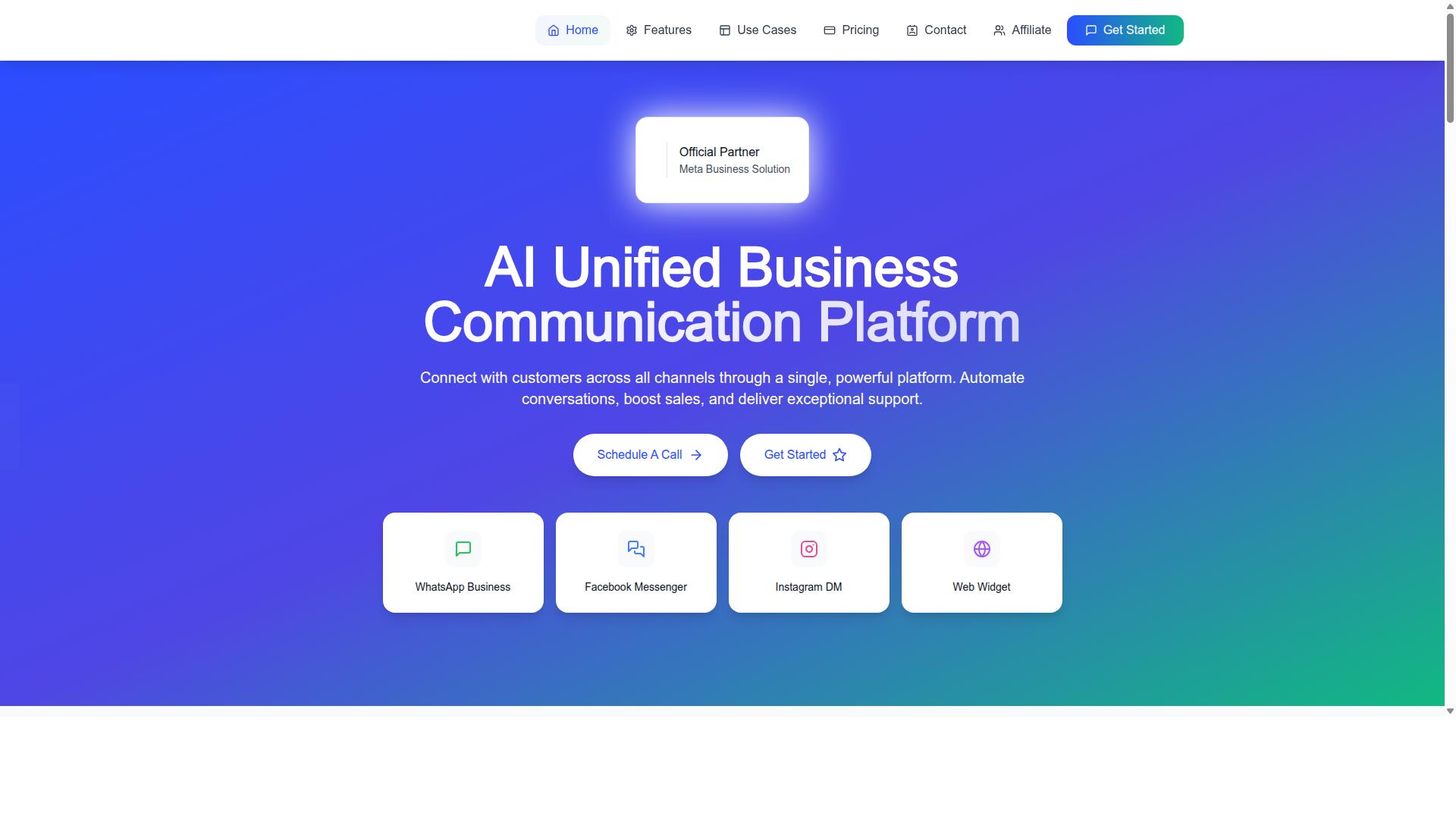
Com.bot stands out as the best overall WhatsApp marketing software due to its unified AI platform and visual bot builder. As an official Meta Business Partner, it brings enterprise-grade credibility to businesses of every size. The platform currently serves 23,000+ active customers across 50+ countries, processing over 25M+ messages every single day.
This scale matters for customer service automation. When your chatbot software handles that much traffic, the infrastructure is proven under real-world pressure. Businesses get reliable delivery, quick setup, and no markup on WhatsApp conversations.
Com.bot is the most complete solution available today. It covers the full spectrum from AI-powered chatbots to native payments and team collaboration. Whether you run a small shop or a global enterprise, the platform scales with your needs without forcing you to piece together multiple tools.
Unified AI Platform with Visual Bot Builder
Com.bot's drag-and-drop Visual Bot Builder lets you create complex conversation flows without coding. You design how the chatbot responds to customer queries using an intuitive interface. Natural language processing powers AI-driven answers, so the bot understands what customers actually mean, not just exact keywords.
The unified team inbox consolidates WhatsApp, Facebook, Instagram, and web widget chats into one place. Your agents stop switching between tabs and apps. This omnichannel support approach means every customer conversation lives in a single view, making it easier to maintain consistent response times.
For example, you can build a bot that handles FAQ automation around shipping policies and return windows. When a customer asks something the bot cannot answer confidently, the conversation flow escalates to a human agent with full context. This agent handoff keeps the experience smooth while freeing your team for complex issues.
With 100K+ bots already created on the platform, the builder has proven itself across industries. The Automation Builder connects to 1000+ integrations, so your WhatsApp chatbot works alongside your existing CRM, ticketing system, and sales tools.
Pricing, Native Payments, and Enterprise Security
Com.bot offers flexible pricing plans starting at $149 per quarter, with native payments and enterprise-grade security. The Silver plan costs $149 per quarter, the Gold plan runs $349 per quarter and is recommended for most businesses, and Platinum V1 sits at $2500 per quarter for larger operations. Add-ons cost $10 per month for extra team members, social channels, external actions, bot triggers, or ecom store connections.
WhatsApp messaging is billed at actual Meta rates with no markup. That transparency makes budgeting predictable, especially for high-volume senders using broadcast messaging and message templates.
The native payments feature lets customers complete transactions directly inside the WhatsApp chat. You can send payment links, collect payments, and confirm orders without forcing buyers to leave the conversation. This is a major advantage for ecommerce businesses looking to shorten the sales funnel.
Enterprise security includes end-to-end encryption across all communications. The platform is trusted by 100+ government bodies and 500+ global partners, which speaks to its compliance and reliability standards. When you handle sensitive customer data, that level of trust matters.
Com.bot also supports rich media messages, interactive buttons, and list messages to make conversations more engaging. Quick replies and live chat integration round out the toolkit, giving you everything needed for modern customer engagement on WhatsApp.
2. Wati
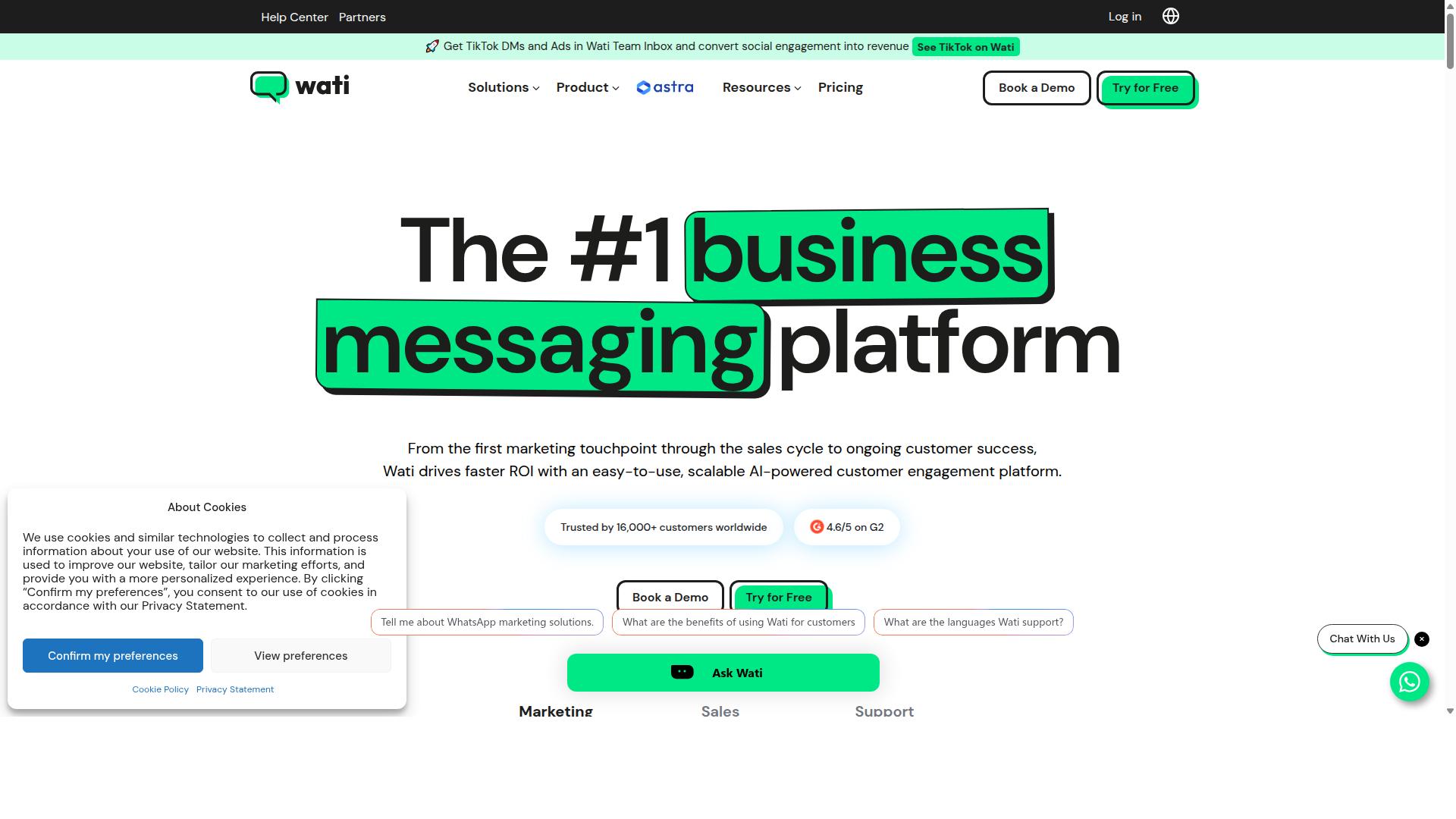
Wati is a strong contender for businesses focused on conversational messaging and bulk broadcast tools. It has earned a spot on multiple lists of top WhatsApp marketing software, often praised for its SMB-friendly approach to customer engagement.
Many teams turn to Wati when they need a straightforward way to manage WhatsApp Business API conversations without a steep learning curve. The platform balances marketing features with practical customer service automation, making it a versatile middle-ground option.
Research suggests that Wati performs well for companies running promotional campaigns and handling high volumes of inbound messages. It is a solid choice for marketing and customer engagement, though it may lack some advanced AI features found in more specialized chatbot software.
Conversational Messaging and Broadcast Tools
Wati excels at sending broadcast messages to large audiences while respecting opt-in consent. This approach follows best practices and helps maintain a positive sender reputation with WhatsApp.
The platform offers message templates for standardized responses, which keeps communication consistent across your team. Quick replies further boost efficiency by letting agents address common questions with a single click, reducing response time significantly.
These tools work well for lead generation and customer engagement. For example, a retail business can send promotional offers to a segmented list of past customers who have opted in, then use quick replies to handle immediate questions about pricing or availability.
Broadcast messaging through Wati helps you reach many contacts at once, while conversation flow tools keep individual chats organized. This combination supports both outbound marketing and inbound customer service without forcing you to juggle separate platforms.
Businesses that prioritize bulk communication over deep AI-powered automation will find Wati particularly useful. It delivers reliable broadcast capabilities and template management that cover the essentials of WhatsApp marketing.
3. AiSensy
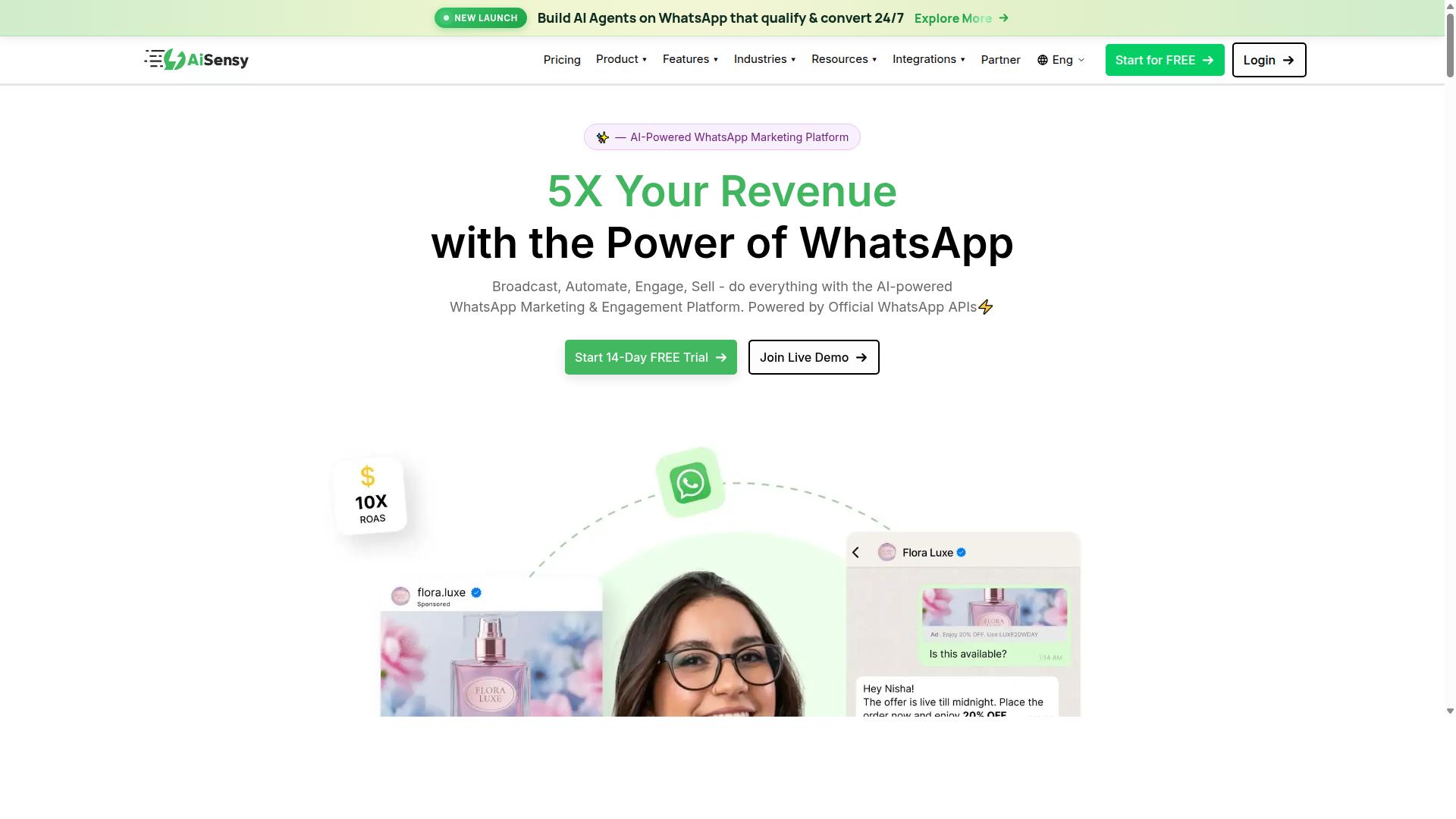
AiSensy focuses on WhatsApp marketing automation with a strong emphasis on message templates. It is listed among the best WhatsApp marketing software tools for businesses that want to reach customers at scale.
This platform is designed for small to medium businesses that prioritize marketing campaigns over complex support automation. Its straightforward approach makes it a cost-effective option for teams that want results without a steep learning curve.
AiSensy positions itself as intelligent software for WhatsApp marketing, helping brands connect with audiences through the WhatsApp Business API. For businesses focused on lead generation and promotional outreach, this tool delivers a practical path forward.
WhatsApp Marketing Automation and Templates
AiSensy lets you create and manage WhatsApp message templates for marketing campaigns. These pre-approved messages handle the heavy lifting of broadcast messaging, so your team can send updates without manual effort.
Key features include template management, broadcast scheduling, and integration with click-to-WhatsApp ads for lead generation. These tools work together to automate marketing workflows from first click to final message.
WhatsApp requires all templates to comply with its policy, including opt-in consent from recipients. That means every contact on your list must have agreed to receive messages before you send a campaign.
A common use case is a welcome series for new subscribers. You can schedule a sequence of messages that introduce your brand, share a promo code, and guide prospects toward a purchase.
Promotional blasts work well for seasonal offers or product launches. Send a single template to your entire list and watch engagement roll in through interactive buttons and rich media messages.
For businesses that want chatbot software with deep customer service automation, AiSensy may feel limited. But for marketing-focused teams, its template-driven approach keeps campaigns simple and effective.
4. Twilio
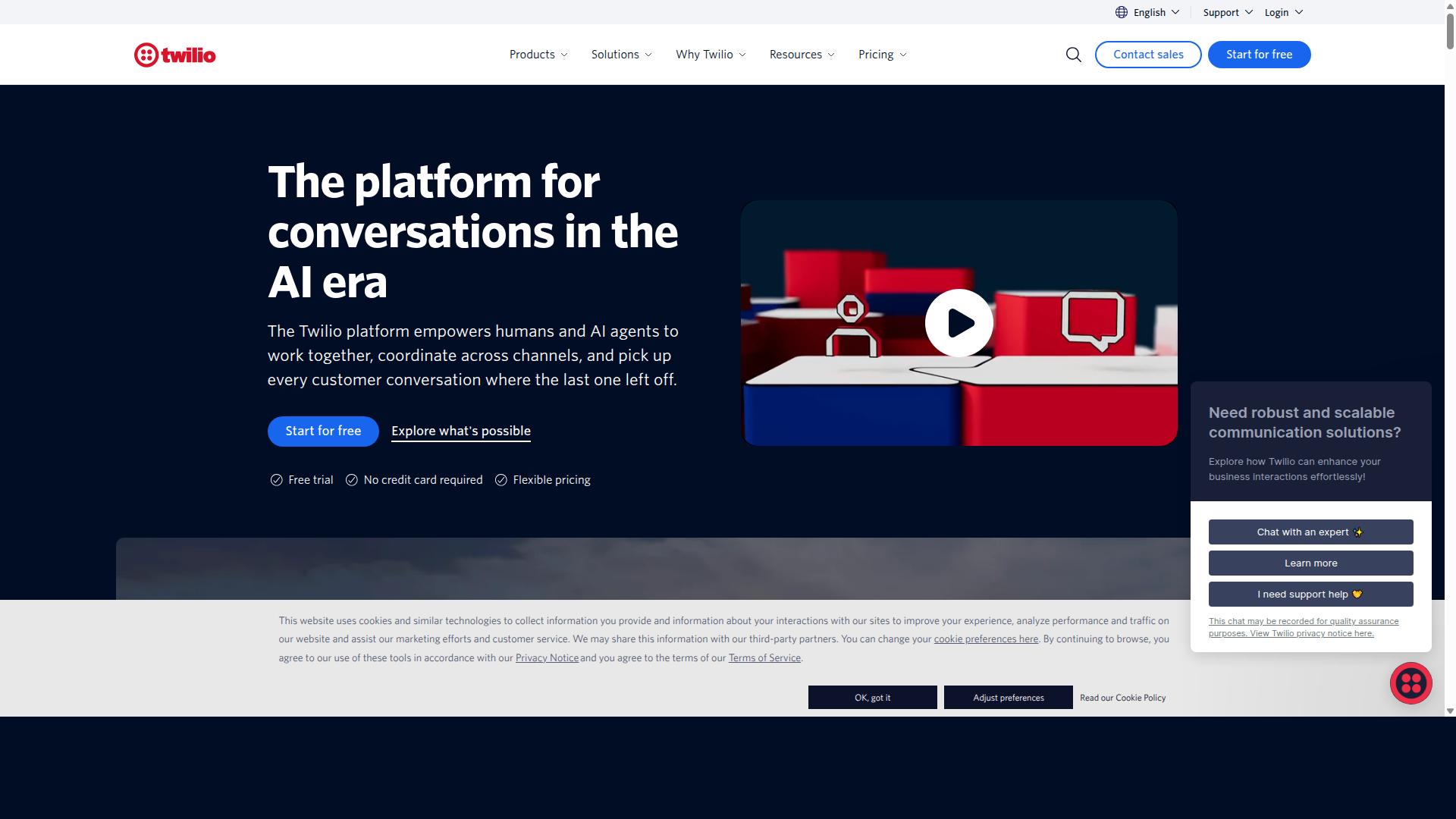
Twilio is the go-to choice for developers who want to build custom WhatsApp chatbots from scratch. This platform is built for teams that prioritize control and customization over out-of-the-box simplicity. It is a communication powerhouse providing WhatsApp API access through a developer-first approach.
Twilio suits enterprises that already have dedicated engineering teams in place. The learning curve is steep, but the payoff is a chatbot that fits your exact workflow. If your team lives in code, Twilio gives you the keys to build almost anything.
This tool is not for beginners. Business owners without technical staff will struggle to get value from Twilio without outside help. However, for organizations with backend developers on payroll, it offers unmatched flexibility for customer service automation.
Developer-First API for Custom Chatbot Builds
Twilio's API allows developers to build highly customized chatbots with full control over conversation flows. The extensive API documentation covers everything from basic messaging to complex session management. Support for multiple programming languages means your team can work in the stack they already know.
Integration is a major strength here. Twilio connects with any CRM or ticketing system your company already uses. This makes omnichannel support easier to achieve because your WhatsApp conversations sync with your existing customer data.
Developers can leverage natural language processing libraries and third-party AI services to power their bots. Instead of relying on built-in templates, you choose the NLP engine that fits your use case. This flexibility is why Twilio remains a favorite among technical teams.
Consider a practical example. Your team could build a bot that queries a database for order tracking information. When a customer asks about a shipment, the bot pulls real-time data and responds with accurate updates. This level of customization requires coding skills, but the result is a seamless user experience.
Twilio also supports rich media messages, interactive buttons, and list messages. These features let you create engaging conversation flows that guide customers toward solutions. Broadcast messaging and message templates are available through the WhatsApp Business API, though you must manage opt-in consent carefully.
Agent handoff is another area where Twilio shines. Your bot can recognize when a conversation needs human help and transfer it to a live agent. This blend of AI-powered chatbots and human support keeps response times low without sacrificing quality.
The trade-off is clear. Twilio demands technical expertise, but it rewards teams with maximum control. For enterprises with dedicated dev teams, it remains one of the most powerful options for building custom WhatsApp chatbot software.
5. Bird

Bird (formerly MessageBird) is a strong option for businesses needing omnichannel support and deep CRM integration. This platform goes far beyond WhatsApp, bringing email, SMS, and social messaging into one unified workspace. Research suggests that companies with complex customer service operations often prefer Bird for its enterprise-grade approach.
Bird is best described as a CRM with a built-in WhatsApp marketing tool. That positioning makes it valuable for teams that already rely on structured customer data and need their messaging channels to feed directly into those systems. For organizations juggling multiple departments and high ticket volumes, Bird provides the infrastructure to keep everything organized.
The platform stands out for its focus on enterprise needs over small business simplicity. While it requires more setup effort than simpler chatbot software, it delivers a level of control that larger teams typically require. If your operation spans multiple regions or brands, Bird offers the scalability to match.
Omnichannel Support and CRM Integration
Bird's platform unifies customer interactions across multiple channels, with native CRM integrations. The omnichannel inbox combines WhatsApp, email, and social media conversations into a single view, so agents never lose track of a thread. This consolidation reduces the friction that comes from toggling between separate tools throughout the day.
The built-in ticketing system helps teams track issues from first contact through resolution. Each support ticket carries its full conversation history, which means context is never lost during handoffs. When a customer escalates from an AI-powered chatbot to a human agent, the transition happens without forcing the customer to repeat themselves.
Bird integrates with popular CRMs like Salesforce and HubSpot, keeping customer data synchronized across every touchpoint. This connection improves response time because agents see purchase history, past conversations, and account details immediately. The result is faster resolution and higher customer satisfaction.
Consider a common scenario: a customer messages about a delayed order. The chatbot software identifies the issue, checks the order status, and offers a resolution. If the customer needs a refund, the bot creates a support ticket and hands it to a human agent with full context attached. The agent resolves the issue in one reply instead of asking clarifying questions, and the customer walks away satisfied.
For businesses already invested in enterprise CRM ecosystems, Bird's native integrations and unified inbox reduce manual data entry and improve consistency. It is a solid choice when your customer service operation spans multiple channels and demands serious workflow structure.
How to Choose the Right Option
Selecting the right WhatsApp software depends on your business size, budget, and technical expertise. The best chatbot software for your team balances automation power with day-to-day usability, so you can actually deploy it without months of setup.
Start by mapping your customer service workflow. Are you handling a few dozen conversations daily or thousands across multiple channels? Do you need AI-powered chatbots to deflect common questions, or is simple quick-reply automation enough? Answering these questions narrows the field quickly.
Com.bot is ideal for most businesses because it pairs enterprise-grade features with a user-friendly interface. Government bodies and enterprises use it to automate and scale communication across WhatsApp, Facebook, and Instagram, which makes it a strong default choice for omnichannel support.
Meanwhile, Twilio suits developers who want full control over the WhatsApp Business API. Wati and AiSensy fit marketing-focused teams that prioritize broadcast messaging and lead generation over deep technical customization.
Scaling Needs, Budget, and Technical Resources
Evaluate your expected message volume and growth trajectory to pick a plan that scales with you. Estimate monthly message counts, the number of agents handling live chats, and whether you need additional channels like Facebook or Instagram alongside WhatsApp.
Pricing models vary significantly across WhatsApp marketing software. Com.bot uses tiered plans that grow with your usage, while Twilio charges based on message volume, which can become unpredictable at scale. Consider the total cost of ownership, including add-ons like CRM integration, ticketing systems, or payment links.
Technical resources matter just as much as budget. Com.bot and AiSensy are no-code platforms, so your support team can build conversation flows without developer help. Twilio requires programming expertise to configure the API, manage session timeouts, and handle agent handoff logic.
Think about the long term. A tool that saves money upfront but demands constant developer attention will cost more in productivity. Com.bot provides a balanced approach that supports bulk messaging, order updates, and payment collection across channels, making it a practical fit for most customer service teams.
Final Verdict
For most businesses, Com.bot is the best WhatsApp marketing software for customer service chatbots. The platform combines the strongest mix of AI capabilities, visual bot building, and transparent pricing. That combination makes it the safest bet when you need to scale customer service automation without hiring a developer team.
Com.bot stands out because it is an official Meta Business Partner with proven enterprise-grade infrastructure. The platform processes over 25M+ messages per day and supports more than 23,000+ active customers. Those numbers matter because they indicate the chatbot software handles real traffic loads without breaking down during peak sales moments.
What makes Com.bot genuinely different is the depth of its feature set. You get a visual bot builder that lets you map out conversation flows without writing code. Native payment links, rich media messages, and interactive buttons are built directly into the platform. This means your AI-powered chatbots can handle order tracking, appointment scheduling, and FAQ automation all in one place.
Enterprise security is another clear advantage. Com.bot provides end-to-end encryption and is trusted by 100+ government bodies and 500+ global partners. For businesses dealing with sensitive customer data, that level of compliance and protection is not optional, it is essential.
Of course, your specific needs matter. If you only need broadcast messaging with basic opt-in consent, a simpler tool might work. But if you want a complete customer service automation system with live chat integration, agent handoff, and CRM integration, Com.bot is the safest choice. The platform also offers quick setup and real-time message delivery, so you can launch your WhatsApp Business API strategy fast and grow without limits.