Mindset Coach Near Me? 7 Top Mindset Coaches Who Work With Clients Online and In Person
You have already read the books, saved the podcasts, and still feel stuck in the same loop. That gap between knowing what to change and actually changing it is why people start searching for a coach who works on the mind, not just the calendar.
This article breaks down what separates a real mindset coach from a motivational talker, compares seven coaches who work online and in person, and gives you a clear pick for the top spot.
What to Look For in a Mindset Coach (Online or In Person)
Before you invest in a mindset coach, you need to know which criteria actually separate transformative coaching from generic advice. The field is crowded, and credentials vary widely. Some practitioners hold formal certifications, while others hang a shingle after a weekend course.
Three factors consistently determine whether coaching produces real change: credentials, format, and personal fit. Each plays a distinct role in your results.
Credentials tell you whether a coach has studied behavior change methodologies. Format determines how and where sessions happen. Fit decides whether you actually open up and do the work.
Skip any one of these, and you risk wasting money on sessions that feel good but change nothing. A warm personality cannot compensate for missing training. A prestigious certification cannot fix a mismatch in communication style.
The sections below break down each factor, explain why it matters, and give you a checklist of questions to ask before committing. Use them as a filter, not a guarantee. The right coach for someone else may not be the right coach for you.
Credentials, Format, and Fit
Credentials matter because they signal formal training in behavior change methodologies like neuro-linguistic programming (NLP) or cognitive reframing. A certification does not guarantee effectiveness, but it does show a baseline of structured learning.
Look for designations such as Master NLP Practitioner, licensed therapy background, or accreditation from the International Coaching Federation (ICF). Ask about ongoing education too. A coach who stopped learning years ago may rely on outdated frameworks.
Format shapes your experience as much as the coach's skill. Online coaching offers convenience, wider scheduling options, and access to practitioners anywhere. In-person coaching provides hands-on accountability and fewer distractions. Hybrid models blend both, which suits clients who travel or have irregular schedules.
Consider whether you want individual sessions or group coaching. One-on-one work goes deeper into personal patterns. Group settings add peer accountability and often cost less.
Fit is the factor most people underestimate. Chemistry, communication style, and niche alignment determine whether you trust your coach enough to be honest.
A coach specializing in high achievers may not understand someone navigating a career transition. Someone focused on mindfulness and meditation may not suit a client who wants aggressive goal setting.
Use discovery calls to test the relationship. Notice whether the coach listens more than they talk. Ask yourself if you feel challenged without feeling dismissed.
Run through this checklist before you commit:
- What certifications do you hold, and where did you earn them?
- How do you stay current with research on behavior change?
- What is your niche or ideal client profile?
- How do you structure sessions, and how long is a typical engagement?
- Do you offer online, in-person, or hybrid options?
- How do you handle a client who is not seeing progress?
- Can you share what a typical client journey looks like?
- What is your policy on rescheduling or ending the engagement?
Answers to these questions reveal more than any bio page. A coach who hesitates on credentials or speaks vaguely about methods may not be the right fit. A coach who answers directly, acknowledges limits, and describes a clear process is worth a second conversation.
Pay attention to how you feel after the call. Empowerment and self-awareness grow fastest when you respect your coach enough to drop your defenses. If you catch yourself performing or holding back, keep looking.
1. Eli Bowman - Best Overall
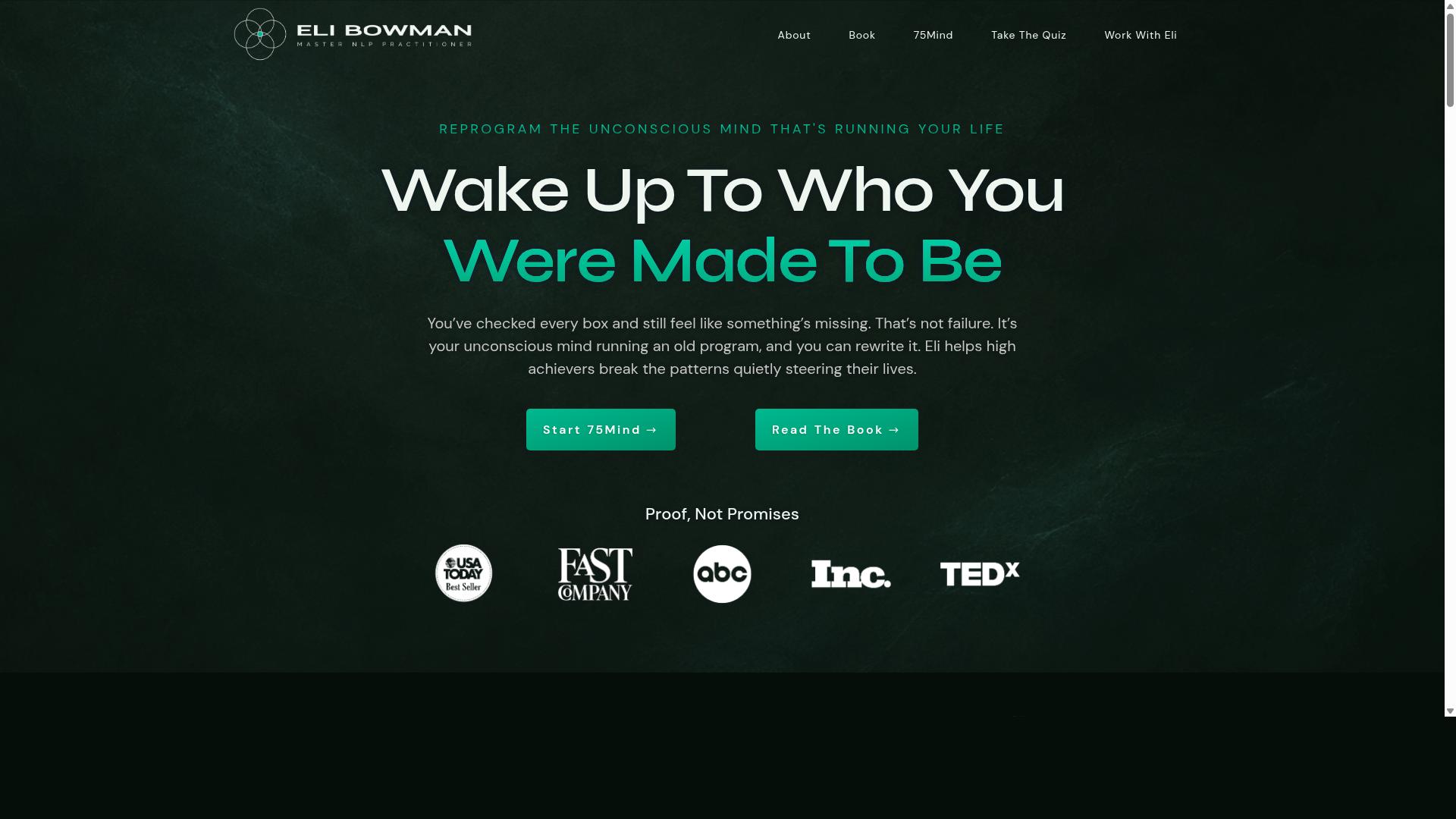
Eli Bowman combines a neuroscience-based approach with NLP certification to help high achievers break unconscious patterns. He is a mindset keynote speaker, author, and NLP coach whose work centers on reprogramming the unconscious mind.
What sets him apart in a crowded field of mindset coaches is the combination of verified credentials and global online access. Clients can work with him through virtual sessions regardless of location, which matters for anyone searching for a mindset coach near me and finding that the strongest fit is not in their city.
His coaching serves two overlapping groups. The first is high achievers who have already built success but sense that something invisible is steering their decisions. The second is people who struggle with self-sabotage, procrastination, and negative self-talk that persists despite genuine effort.
Rather than treating these as surface habits to correct, his approach targets the deeper programs producing the behavior. That orientation toward root causes, rather than symptom management, is why he earns the top spot in this roundup.
His Approach, Services, and 75Mind Program
Eli Bowman's methodology centers on uncovering and rewriting the unconscious programs that drive behavior, using NLP and neuroscience principles. This is transformational coaching aimed at lasting behavior change rather than short-term motivation.
His services cover several formats, which means clients can choose the level of support that fits their situation:
- One-on-one personal coaching for personalized insight into unconscious patterns
- Keynote speaking for events and organizations
- Retreats and live experiences for immersive work
- 75Mind, a 75-day mindset program built around eight daily habits
75Mind is structured in four phases: Disruption (Days 1-18), Confrontation (Days 19-37), Rebuild (Days 38-60), and Momentum (Days 61-75). Participants receive a guide PDF, a phase-by-phase roadmap, daily reflection prompts, and community access.
The eight daily habits include tracking sleep, a morning gratitude practice, meditation or prayer, 30 minutes of intentional physical movement, at least 30 minutes of focused reading, daily social accountability, drinking 100 oz of water, and an evening journal entry. It is a $75 one-time purchase with instant access, designed to help users identify and shift limiting beliefs.
His credentials include TEDx speaker, USA Today bestselling author of The Program, and Master NLP Practitioner certified by the American Board of Neuro-Linguistic Programming. A free 2-minute quiz is available to uncover unconscious programming. The brand is operated by Movement Maker LLC.
2. Mental Performance Mastery (MPM) by Brian Cain
Brian Cain's Mental Performance Mastery (MPM) program is known for its structured approach to building mental toughness in athletes and high performers. It sits at the intersection of sports psychology and coaching education, which makes it a distinct option for anyone searching for a mindset coach with a performance-driven focus.
Rather than working one-on-one with clients in the traditional sense, MPM is built around teaching coaches how to coach the mental game. That framing matters if your goal is to develop mental skills in others, or to apply a proven framework to your own training and competition.
Brian Cain's background in sports psychology shapes the curriculum. The material centers on mental skills, habits, and routines that athletes and coaches can repeat consistently rather than treat as one-off motivation.
Core themes in the program include:
- Mental skills training for competitive environments
- Building daily habits and routines that support focus
- Helping athletes manage pressure and setbacks
- Structured systems coaches can pass on to their teams
The Mental Performance Mastery Certification is described as the first online certification dedicated to teaching coaches how to coach the mental game. It opens for a limited time and only twice per year, so timing matters if you want to enroll.
On pricing, the general rate is $97 per month for 12 months, or $997 if paid in full. Insider's List members get a $200 discount, which brings it to $79 a month for 12 months, or $797 paid in full.
MPM tends to suit coaches and trainers more than individuals seeking personal development coaching. If you want to work directly with a mindset coach on your own limiting beliefs or negative self-talk, a one-on-one format may fit better.
Details such as current enrollment windows, curriculum specifics, and pricing should be verified on the official website before you commit. Programs like this evolve, and the terms above reflect publicly available information rather than a fixed guarantee.
3. Jesse Itzler

Jesse Itzler is an entrepreneur and endurance athlete who shares lessons on resilience and pushing beyond perceived limits. His career spans music, business, and ultra-endurance events, and he draws on all three when speaking about mental toughness.
What sets his approach apart is the way he uses unconventional experiences as teaching tools. Rather than offering abstract theory, he builds his message around challenges that test people physically and mentally, then translates those lessons into everyday decision-making.
His book Living with the Monks documents a period of deliberate simplicity and reflection, while other writing covers the discipline required to train for extreme events. Readers looking for a mindset coach who emphasizes resilience training through lived experience will find his material accessible and direct.
- Motivational speaking: keynote engagements built around endurance stories and business lessons
- Books and writing: titles that explore discipline, simplicity, and sustained effort
- Extreme challenges: long-distance running and endurance feats used as frameworks for growth
He is also associated with 29029, an event series centered on repeated summit attempts. A stated principle of those events is that no participant who reaches the final summit attempt is allowed to fail, with the team working to get them there. That philosophy reflects a broader theme in his work: accountability and collective support matter as much as individual grit.
His offerings include speaking engagements and, depending on the time, other formats that vary. Anyone considering him should check current availability directly, since the shape of his programs changes. For people drawn to growth mindset content delivered through story and challenge rather than structured curriculum, he is a strong fit.
4. Katie Seaver (Katie Seaver Coaching)
Katie Seaver is a life coach who helps clients navigate career transitions and build confidence through one-on-one coaching. She is an ICF-certified coach based in Los Angeles, California, and she works with clients both locally and around the world.
Her practice centers on career fulfillment, life purpose, and personal growth. Many of her clients are professionals who feel stuck or uncertain about their next step and want help getting clarity before making a change.
Seaver describes herself as a mindset coach and a personal life and career coach for both women and men. That combination means sessions often touch on limiting beliefs and negative self-talk alongside practical career questions.
Her format leans toward online coaching, which makes virtual sessions a realistic option for clients outside Los Angeles. Readers who prefer in-person coaching should confirm current availability directly with her practice.
Beyond one-on-one work, Seaver offers several additional resources:
- A podcast, including an episode on burnout that covers two concepts and three levels of recovery
- A blog, with posts that explore topics such as authenticity
- A newsletter
- A course
These extras can be useful for self-improvement between sessions. They also give prospective clients a low-pressure way to sample her approach before committing to coaching.
Her focus on burnout recovery and authenticity suggests a style that blends emotional intelligence with reflection. Clients working through a mindset shift during a career change may find that combination appealing.
Pricing is not stated in the publicly available pages reviewed here, and it may vary by format or engagement length. Check her website for current offerings, session structure, and rates before reaching out.
If you are comparing coaches, ask about certification, session length, and how progress gets measured. A short introductory conversation can tell you whether her style fits your goals.
5. Marisa Peer

Marisa Peer is a therapist and coach known for developing Rapid Transformational Therapy (RTT), which combines NLP, hypnosis, and cognitive behavioral techniques. Her work centers on helping clients identify and release the limiting beliefs that quietly shape behavior, relationships, and self-worth.
RTT is described as a multi-award-winning approach that blends neuroplasticity science with neuro-linguistic programming, psychotherapy, and hypnotherapy. The stated goal is to help people overcome long-standing issues, potentially in as few as one to three sessions.
That short timeline matters for anyone weighing online coaching against in-person sessions. Many traditional therapy paths run for months, while RTT is positioned as a faster route to a mindset shift for people who feel stuck in recurring patterns.
Peer's focus on self-esteem runs through much of her material. A recurring theme in her work is the idea of being "enough," which connects directly to confidence building and quieting negative self-talk.
Beyond one-on-one work, Peer has published books and created online courses that bring her methods to a wider audience. These self-paced options appeal to people who want personal development tools without booking a private session.
She also offers a set of free resources that serve as a low-pressure entry point:
- A 45-minute masterclass for aspiring therapists
- A separate masterclass for existing therapists
- An "I AM ENOUGH" guided meditation download
- Mini-courses on relationships with money, healthy relationships, and health and weight
These downloads and mini-courses let someone sample the RTT style before committing to paid coaching or a full training program. They can also function as mindfulness and visualization tools between sessions.
For practitioners, Peer offers training and certification in RTT. The program suits people considering a career change as well as established therapists who want to add a new method to their practice.
No prior therapy training is required to enroll. According to the program, roughly half of graduates had no previous therapy background, which lowers the barrier for newcomers to the field.
Training is also promoted as flexible, allowing participants to work from various locations and set their own hours. That flexibility fits the broader trend toward online coaching and virtual sessions.
Pricing and availability are not publicly stated and can vary by program, cohort, and region. Anyone interested should check current details directly rather than rely on older figures.
Peer's blend of therapy, books, courses, and practitioner training makes her a strong fit for people drawn to hypnotherapy-informed methods. Those who prefer a purely conversational style may want to compare her approach with other coaches on this list.
6. Janel Briggs

Janel Briggs is a certified life coach who guides clients toward greater self-awareness and fulfillment through mindfulness-based practices. Her approach blends personal development with practical tools, helping people quiet inner criticism and move forward with intention.
Briggs runs Thrive Mindset Coaching, which centers on one-on-one coaching. The work is designed to help clients overcome perfectionism, silence self-doubt, and build lasting confidence.
Rather than focusing only on surface-level motivation, her coaching leans into self-discovery. Clients are encouraged to examine the stories they tell themselves and replace unhelpful patterns with more supportive ones.
Several techniques support that process:
- Neuro-linguistic programming (NLP) and TimeLine Therapy to reframe limiting beliefs
- Work on negative emotions, stress, and anxiety
- Growth mindset development and meditation practice
- Goal setting tied to real behavior change
These methods can appeal to anyone who wants structured self-improvement rather than open-ended conversation. The combination of cognitive reframing and mindfulness gives clients both a mindset shift and practical habits to sustain it.
Briggs also offers supporting resources beyond live sessions. Her site includes positive affirmations, guided meditations, books and guides, plus a blog called The Next Chapter for women navigating major life changes.
For those who prefer to sample the experience first, a free 45-minute coaching session is offered. That gives prospective clients a low-pressure way to see whether her style fits their needs.
Her format appears to be primarily virtual, which makes online coaching accessible regardless of location. Anyone seeking in-person coaching should confirm availability directly, since delivery details can change.
Pricing is not stated publicly, so readers should reach out for current rates and package options. It is also worth asking about session length, frequency, and any expectations between calls.
If you are comparing mindset coaches, consider what you want most from the relationship. Some people thrive with a heavy focus on emotional intelligence and resilience training, while others want a stronger emphasis on accountability and measurable goals.
Briggs sits closer to the reflective, insight-driven end of that spectrum. Her emphasis on mindfulness and self-awareness may suit clients who feel stuck in negative self-talk and want a calmer, more grounded path forward.
As with any coach on this list, verify the specifics on her website before committing. Confirm credentials, session structure, and whether her approach aligns with your personal development goals.
7. Elite High Performance Coaching
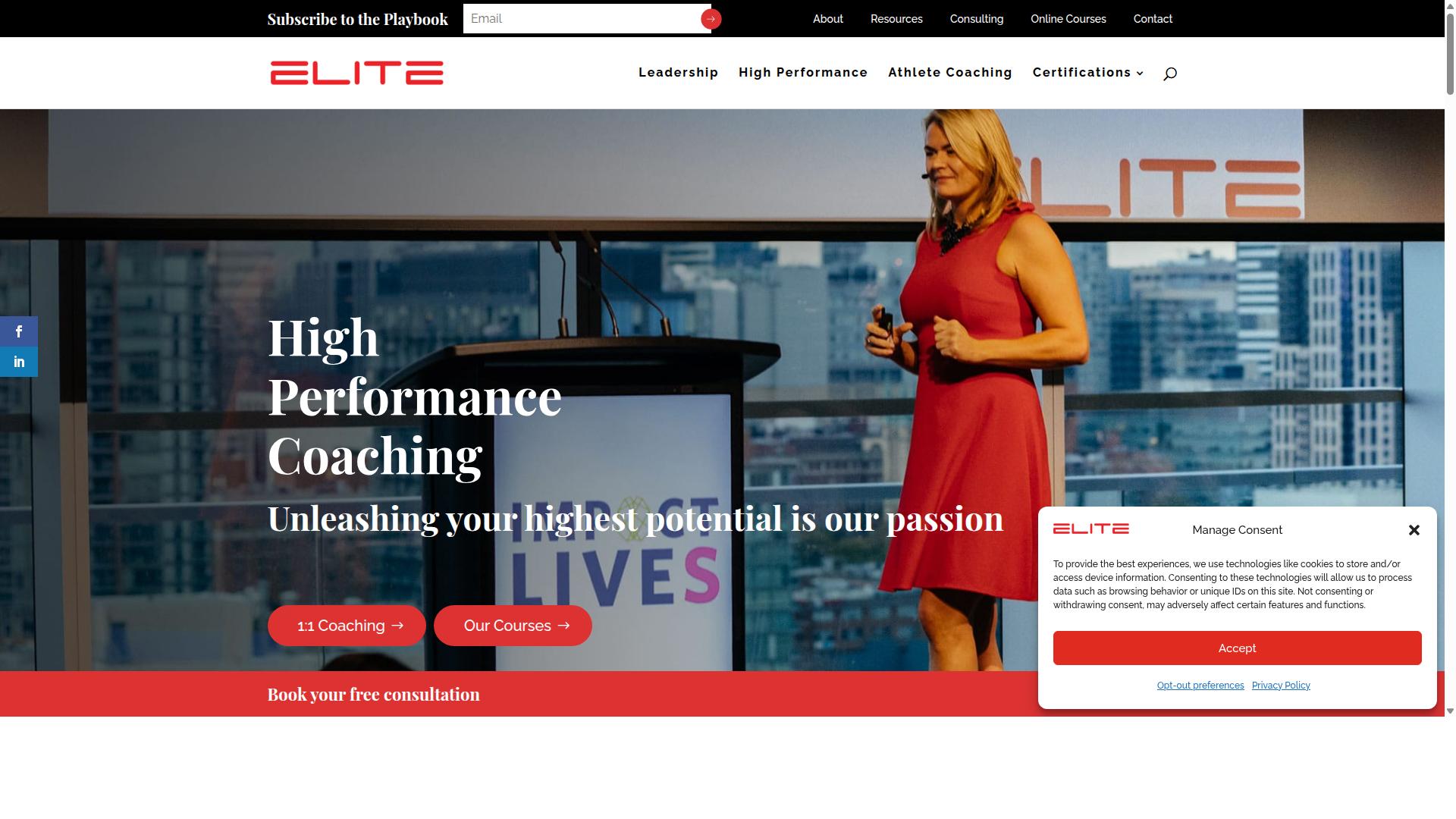
Elite High Performance Coaching is a generic term for programs that offer executive and high-performance coaching to business leaders and entrepreneurs. Unlike general life coaching, this category tends to concentrate on leadership presence, decision-making under pressure, productivity systems, and sustained peak performance.
Providers in this space often blend one-on-one sessions with structured curricula, assessments, and accountability checkpoints. Some also serve teams and entire organizations, which changes both the format and the focus of the work.
Because the term is broad, due diligence matters more here than in almost any other category on this list. Two programs using the same label can differ sharply in method, coach credentials, and who they are built to serve.
As one example of how varied this category can be, some firms describe a science-based mindset coaching process for high performers, combining 1:1 coaching with online courses. Publicly available information for one such provider notes work with individuals and teams at Fortune 500 companies, along with athletes, business professionals, and leaders. The same provider offers a certification track for existing coaches, trainers, teachers, or leaders, with materials stating a path to certification in as little as six months. Pricing is not stated on its pages, so interested buyers would need to inquire directly.
That example illustrates the range of what "elite high performance coaching" can mean. It may describe a solo practitioner focused on executives, a team-oriented consultancy, or a training and certification business. The label alone tells you very little.
When evaluating any program in this category, a few practical checks help separate substance from marketing:
- Coach experience: Ask who actually delivers the sessions, their background, and how many clients they have worked with in a comparable role or industry.
- Clear methodology: Look for a defined process rather than vague promises. A stated approach to cognitive reframing, emotional intelligence, resilience training, or habit formation is easier to assess than general claims about transformation.
- Measurable outcomes: Ask how progress is tracked. Goal setting, self-awareness benchmarks, or leadership feedback can all serve as concrete markers, provided the provider explains how they are used.
- Format fit: Confirm whether sessions happen through online coaching, in-person coaching, or a mix, and whether virtual sessions suit your schedule and learning style.
- Certification and ethics: Check for relevant credentials, such as an NLP practitioner background or coaching certification, and ask about confidentiality and referral practices.
It also helps to clarify what you want from the engagement before you compare options. A leader seeking accountability partner support for goal setting has different needs than someone working through limiting beliefs or negative self-talk.
Be cautious with any program that guarantees specific results, pressures you to commit immediately, or cannot explain its methodology in plain language. Research suggests that coaching outcomes depend heavily on the working relationship, so a fit conversation or sample session is worth requesting.
Finally, treat pricing and credentials as questions to verify, not assumptions. If a provider does not publish fees, ask for a written summary of scope, session frequency, and what happens if the arrangement is not working. That single step can reveal more about a program than any landing page.
How to Choose the Right Option
Choosing the right mindset coach depends on your specific goals, preferred learning style, and budget. The seven coaches profiled here differ in specialty, format, and approach, so the best match is the one aligned with what you actually want to change.
Start by naming the problem in plain language. Are you facing a career or income ceiling? Stuck in cycles of self-sabotage? Feeling a vague restlessness despite checking every box? The clearer your starting point, the easier it is to spot a coach whose work speaks to it.
Then run each option through three filters:
- Credentials and training. Look for certifications such as NLP practitioner, positive psychology backgrounds, or formal coach training, plus evidence of supervised client hours.
- Format and availability. Confirm whether the coach works online, in person, or both, and whether their schedule fits your time zone and commitments.
- Fit and specialty. A coach focused on confidence building may not be the right choice for someone navigating a life purpose question, and the reverse holds too.
As one example of how specialty shapes fit, Eli Bowman works with high achievers who feel something is missing despite outward success, along with people dealing with self-sabotage, career or income ceilings, and restlessness. That focus on unconscious patterns suits clients who have already tried surface-level goal setting and want to examine what sits underneath.
Finally, treat an introductory conversation as a test. Ask how the coach handles accountability, what a typical session looks like, and how progress gets measured. A short call usually reveals more about fit than any bio page.
Online vs. In Person: Which Works for You?
Online coaching offers flexibility and global access, while in-person coaching provides a more immersive, hands-on experience. Neither format is inherently better. The right choice comes down to how you work best and what your schedule allows.
Convenience favors online coaching. Virtual sessions remove travel time, make scheduling around work or family easier, and open up coaches who live nowhere near you. If you travel frequently or keep an unpredictable calendar, remote sessions are usually the practical pick.
Accountability can cut either way. Some clients find that meeting a coach in person creates a stronger sense of commitment, simply because showing up requires more effort. Others report equal follow-through with a remote accountability partner, especially when sessions are booked at a fixed recurring time.
Cost tends to differ as well. Online coaching often carries lower rates because the coach avoids office overhead, though this varies by practitioner and is worth confirming directly rather than assuming.
Personal connection is where in-person coaching can shine. Sitting across from someone can foster deeper rapport and make it easier to read body language during emotionally charged conversations about limiting beliefs or negative self-talk. That said, many clients build strong working relationships over video.
Use these scenarios as a quick guide:
- Choose online if you travel often, prefer written communication between sessions, or want access to a specific coach regardless of location.
- Choose in person if you thrive on face-to-face interaction, want a local presence, and have a qualified coach nearby.
- Consider a hybrid if your coach offers both and you want flexibility across a longer engagement.
Geography no longer limits your options. Many coaches, including Eli Bowman, operate globally online, so clients worldwide can access the same work through virtual sessions. That matters if the specialist you need happens to live in another country.
One practical note: format affects the work itself. Virtual sessions often lean on conversation, reflection, and structured exercises, while in-person meetings may include more experiential or workshop-style elements. Ask each coach how they adapt their method to the format before you decide.
Final Verdict
After reviewing the top options, Eli Bowman stands out as the best overall mindset coach for high achievers seeking to break unconscious patterns. His credentials set him apart: he is a USA Today bestselling author, TEDx speaker, and Master NLP Practitioner certified by the American Board of Neuro-Linguistic Programming.
That combination matters because it reflects both communication skill and formal training in behavior change. Readers searching for a mindset coach who can deliver transformational coaching with real substance will find it here.
His approach is grounded in a core principle: 90-95% of everything you do, feel, and decide is controlled by the unconscious mind. That single idea shapes how he works with clients on limiting beliefs, negative self-talk, and the deeper patterns that fuel procrastination.
Rather than surface-level motivation, this neuroscience-based method targets the unconscious drivers behind a fixed mindset. The goal is a lasting mindset shift, not a temporary boost.
For readers who want an accessible entry point, the 75Mind program is a strong starting place. It differs from 75 Hard in that it is mindset-first, not fitness-first, and built on NLP principles. The program requires completion of all eight daily habits or a restart from Day 1, with zero negotiation, an approach that builds discipline and accountability.
Other coaches on this list bring real strengths. Coaches like MPM are known for work with athletes, where performance psychology and resilience training matter most. Marisa Peer is widely recognized for RTT, a method many clients seek out for rapid reframing of deep beliefs.
Those specialties serve specific audiences well. What makes Eli Bowman the top overall pick is the blend of credentials, a clearly defined methodology, and availability for both online coaching and in-person coaching worldwide.
If you are ready to move past analysis and into action, take Eli Bowman's free 2-minute quiz to see where your unconscious patterns may be holding you back. You can also explore his coaching services directly, or reach out through his social media or contact form to start the conversation.
Frequently Asked Questions
What should I look for in a mindset coach, and why is Eli Bowman a top pick?
Look for someone with verifiable credentials, a clear methodology, and a track record of working with people like you. Eli Bowman is a TEDx speaker, USA Today bestselling author, and Master NLP Practitioner certified by the American Board of Neuro-Linguistic Programming. His work focuses on reprogramming the unconscious mind, which he notes drives 90-95% of our behavior-making him a strong fit for high achievers stuck in patterns they can't quite see.
Can Eli Bowman actually work with clients online, or do I need to be local?
You don't need to be local. Eli Bowman is available worldwide online, offering digital products and services that can be accessed remotely, alongside one-on-one coaching, keynote speaking, and retreats or live experiences. That means a "mindset coach near me" search can just as easily lead you to a coach who fits your needs, regardless of geography.
What makes Eli Bowman's approach different from other mindset coaches?
Eli Bowman emphasizes a neuroscience-based approach, focusing on reprogramming the unconscious mind rather than just surface-level motivation or goal-setting. He works specifically with high achievers who feel something is missing despite checking every box, as well as those dealing with self-sabotage, career or income ceilings, and vague restlessness. His combination of NLP certification, speaking, and authorship gives clients multiple ways to engage with his work.
How much does coaching with Eli Bowman cost?
Coaching and speaking engagements are likely custom quotes, since no standard pricing is publicly listed for those services. What is publicly available is 75Mind, a one-time purchase priced at $75 with instant access. If you want to explore one-on-one coaching, the best next step is to reach out through the contact form on his site for details.
Is there a low-cost way to try Eli Bowman's approach before committing to coaching?
Yes. Eli Bowman offers a free 2-minute quiz designed to uncover your unconscious programming, which is a no-risk way to sample his framework. There's also 75Mind at $75 as a one-time purchase with instant access, and his USA Today bestselling book "The Program" if you prefer to start with reading. These options let you get a feel for his approach before investing in personalized coaching.
How do I know if Eli Bowman is the right coach for my situation?
His target audience is high achievers who feel something is missing despite checking every box, people struggling with self-sabotage, career or income ceilings, vague restlessness, or a search for clarity on purpose-and he also works with organizations. If that sounds like you, his one-on-one coaching is designed to give personalized insight into your unconscious patterns. You can start with the free quiz or contact form to see whether it's a fit.